7plusrailroader The Ultimate Guide to Model Railroading and Railway Gaming
Model railroading has been interesting to people for a long time. It started with simple tin toys and has grown into complicated miniature worlds that combine art, engineering, and beauty. No matter if you like the historical beauty of steam trains or the precision of modern diesel operations, the hobby gives you a lot of room to be creative and learn new things. Today's model railroaders can use digital control systems, complicated machinery, and even computer programs to make their trains come to life in completely new ways.
The intersection of traditional model railroading and digital games is an exciting new field for railway lovers. Railroads have made an appearance in computer games and casino slots with railroad themes, and computer games like Railroader have created operational realism that was previously unachievable. This intersection demonstrates how the timeless appeal of trains continues to inspire new methods of interacting at different stations.
The Legacy of Model Railroading
History and Evolution of Model Trains
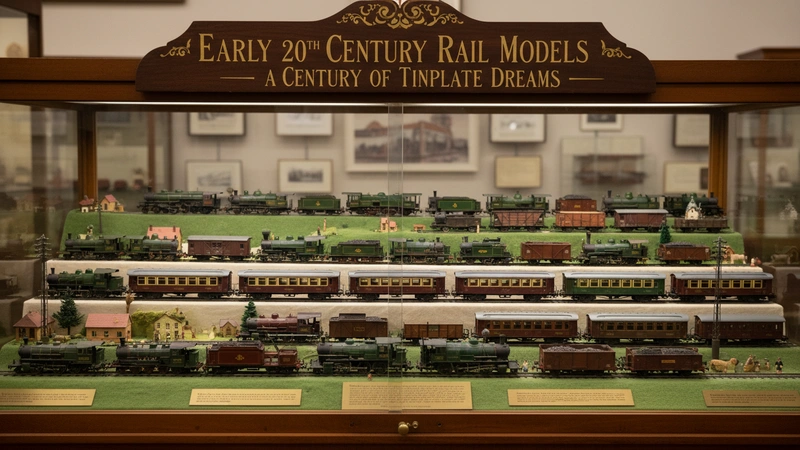
In the middle of the 1800s, toy companies made simple train sets for kids to play with. This was the start of model railroading. By the early 1900s, companies in Germany and the US like Märklin and Lionel had turned simple toys into scale models with lots of details that adults wanted to collect. Electricity changed the game for good in the 1920s. It changed how things worked and let you make complex layouts where more than one train could be moving at the same time.
After World War II, troops wanted to do things that were tranquil, and as suburbs spread, they provided area for basement empires. This was the best time for model railroading. Hobby magazines encouraged people to share what they knew, which sped up the process of coming up with new ideas. Manufacturers standardized scales and added more detail. Digital Command Control, which came out in the 1990s, was a huge stride forward since it let each train run on its own on the same track.
Essential Equipment for Modern Model Railroaders
You need to carefully choose out the essential tools you'll need to build a model train layout. The most essential choice is the scale, which tells you how big your models are compared to real things. HO scale is still the most popular choice around the world because it has the best balance of detail and space. N size is great for people who don't have a lot of space, and O scale is great for people who do have a lot of space.
Beyond scale selection, every model railroader needs quality track, appropriate power supply, and rolling stock to bring their layout to life. Modern track systems offer remarkable reliability with pre-ballasted options that simplify installation. Controllers range from simple DC power packs to sophisticated Digital Command Control systems that enable realistic multi-train operations with sound, lighting, and automated functions. The hobby's modularity allows gradual expansion as skills and budget permit.
Building Your First Layout
You need to carefully plan your actions so you don't make frequent blunders when designing your first model train layout. First, look at the space you have in a realistic way to make sure there is enough light and access on all sides. One mistake that new people often make is trying to squeeze too much track into too small space. This makes the curves not work and makes the track hard to use. Make a simple strategy that works well and gives you choices about how to carry it out.
Benchwork construction represents the foundation of your model empire, and quality workmanship here pays dividends for decades. Traditional L-girder construction offers flexibility and strength, while modular approaches enable reconfiguration as needs change. Once framing is complete, track laying demands precision and patience. The 7+ Railroader community consistently emphasizes the importance of achieving perfect track performance before adding scenery, as troubleshooting becomes exponentially more difficult once plaster and paint are applied.
Understanding Scale Systems and Track Gauges
Comprehensive Scale Comparison Guide
| Scale | Size Ratio | Track Gauge | Space Requirements | Best Use Case |
|---|---|---|---|---|
| Z Scale | 1:220 | 6.5mm | Minimal (2x3 feet) | Apartment layouts, maximum density |
| N Scale | 1:160 | 9mm | Modest (4x6 feet) | Complex operations in limited space |
| HO Scale | 1:87 | 16.5mm | Moderate (4x8 feet) | Most versatile, extensive product availability |
| S Scale | 1:64 | 22.5mm | Substantial (5x9 feet) | American prototype emphasis |
| O Scale | 1:48 | 32mm | Large (8x12 feet) | Maximum detail, visual impact |
| G Scale | 1:22.5 | 45mm | Outdoor gardens | Weather-resistant outdoor railways |
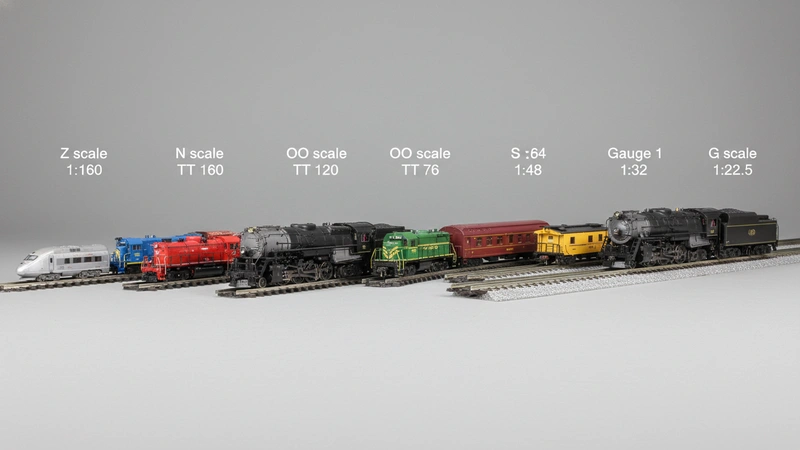
Scale selection profoundly impacts every aspect of your model railroad experience. Z scale enables entire railroad empires in spaces no larger than a coffee table, though working with components this tiny demands steady hands and good eyesight. At the opposite extreme, G scale models possess enough mass to function as garden features. The middle scales represent compromises between detail, space, and affordability, with HO scale emerging as the industry standard.
Choosing the Right Track System for Your Space
Track selection involves more than matching your chosen scale. Code refers to rail height, with lower codes providing more realistic appearance at the cost of potentially finicky operation. Sectional track offers convenience through pre-curved and straight pieces that snap together, ideal for beginners. Flexible track provides unlimited design freedom but requires more skill to install properly, including cutting rails and ensuring smooth joints.
Modern track systems increasingly feature integrated roadbed that elevates rails to realistic height while dampening noise and simplifying installation. These systems command premium pricing but deliver professional results with minimal effort. Traditional track requires separate roadbed installation, typically cork or foam products. Consider your priorities carefully—beginners often appreciate integrated systems' convenience, while experienced modelers may prefer traditional methods' control and customization options.
Digital Command Control vs Traditional Operations
Digital Command Control revolutionized model railroading by addressing the fundamental limitation that plagued the hobby since inception—the inability to independently control multiple locomotives on the same track. Traditional DC systems vary track voltage to control speed, meaning all locomotives receiving power respond identically. DCC embeds digital signals in the track power, with decoders in each locomotive responding only to their assigned address.
You will need to acquire command stations, throttles, and decoders for each train if you want to transition to DCC. On the other hand, modern decoders with sound are incredibly realistic. They make authentic engine sounds that change depending on the throttle position and when the engine stops. A lot of modern trains already have decoders built in, which makes it easy to change them. For simple lines that only need to run one train, DC operation is still possible.
The Railroader Game Revolution
What Makes Railroader the Ultimate Train Simulation
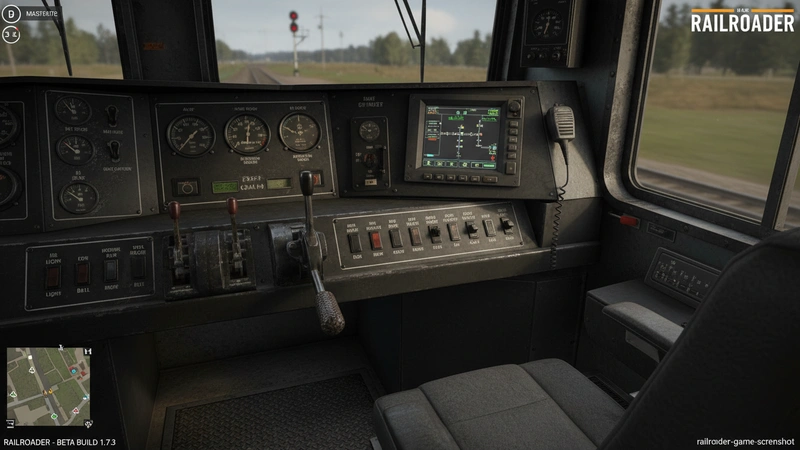
Railroader was the first train simulation to be both realistic and easy to play. It showed how complicated real railroading is while yet being fun to play. Railroader is different from arcade-style train games that only require basic throttle control. It requires players to pay attention to air brake systems, locomotive dynamics, and realistic operational procedures.To avoid derailments or runaways, players must pair cars correctly, set hand brakes, and handle trains correctly.
The game's open-ended sandbox approach enables players to operate various locomotive types across realistic territory, building consists and switching industries as they would in prototype railroading. Physics simulation accounts for grade, curvature, weather conditions, and train weight, requiring players to develop genuine railroading skills. The active modding community has exponentially expanded content beyond the base game, adding historically accurate locomotives and authentic railway routes.
Top Railroader Mods to Enhance Your Experience
- Realistic Locomotive Physics Overhaul - This fundamental mod recalibrates locomotive performance characteristics to match documented real-world specifications, including accurate horsepower ratings, tractive effort curves, and dynamic braking performance. Players will find this mod demands more careful train handling and speed management, particularly when operating heavy consists on challenging grades.
- Historical Rolling Stock Expansion Pack - Adding over 200 meticulously researched freight and passenger cars spanning six decades of North American railroading, this mod enables period-accurate consists. Each car includes correct paint schemes, dimensional accuracy, and appropriate mechanical details that affect operational characteristics.
- Enhanced Audio Library - Replacing generic engine sounds with authentic recordings captured from specific locomotive models transforms the immersion factor dramatically. Hearing the distinctive turbo whine of an EMD SD40-2 or the characteristic exhaust beat of an Alco Century series adds visceral connection beyond visual simulation alone.
- Multiplayer Operations Framework - This ambitious mod enables cooperative play where multiple users can operate different trains simultaneously on the same railroad, coordinating through realistic radio communications. Dispatchers can control signals while engineers handle locomotive operations, recreating the teamwork essential to real railroad operations.
- Advanced Weather and Lighting System - Dramatically improving visual presentation through dynamic weather effects, realistic day-night cycles, and season variations that affect both aesthetics and operations. Snow and ice reduce adhesion, requiring modified operating techniques, while realistic lighting transforms night operations into atmospheric experiences.
Community Resources and Multiplayer Features
The Railroader community has cultivated extensive resources that dramatically reduce the learning curve. Dedicated wikis document every game system, from basic controls through advanced techniques. Video tutorials walk players through complex procedures, while forums provide troubleshooting assistance and operational advice. This collaborative knowledge-sharing mirrors the real railroading culture where experienced engineers mentored new hires.
Multiplayer functionality transforms Railroader from solitary simulation into collaborative experience. Scheduled operation sessions see participants assuming different roles—engineers, conductors, dispatchers—working together to move trains efficiently while adhering to realistic rules. These sessions often recreate specific historical operations, with participants studying employee timetables to perform their duties authentically.
Railways in the Gaming Industry

From Model Railroader to Casino Entertainment
People have been interested in trains for a long time, and this fascination has gone beyond traditional pastimes to other forms of entertainment, like the expanding online gambling business. This change illustrates that famous pictures of trains, like big locomotives, romantic passenger trains, and vintage steam engines, appeal to people of all ages. Developers of casino games noticed that this cultural appeal might be used to make games that people who like to bet and people who remember traveling by train would both like.
The transition from model railroader dedication to casual railway-themed entertainment represents different engagement levels with the same fundamental appeal. Where serious hobbyists invest thousands of hours building realistic layouts, casino players enjoy railway aesthetics in bite-sized entertainment. Railway-themed casino slots typically feature classic imagery like station platforms, conductor uniforms, vintage travel posters, and gleaming locomotives. Bonus features might involve selecting destinations on route maps, creating thematic coherence beyond surface-level graphics.
This crossover demonstrates railways' unique position in popular consciousness—simultaneously representing industrial power, romantic adventure, engineering achievement, and nostalgic Americana. Online casino platforms have successfully tapped this multifaceted appeal. The 7+ Railroader platform has documented this phenomenon, noting how railway themes appear consistently among top-performing casino titles, suggesting that trains' cultural resonance extends far beyond dedicated hobbyist communities.
Popular Railway-Themed Casino Slots and Games
- Express Gold Railways Jackpot - This high-variance slot game centers on Old West railway expansion, featuring symbols like steam locomotives, gold bars, and frontier station buildings. The bonus round challenges players to select railway routes across a stylized Western map, with successful choices revealing multipliers or progressive jackpot opportunities. The game's atmospheric soundtrack incorporates authentic steam whistle effects.
- Orient Express Luxury Journey - Evoking the golden age of luxury rail travel, this elegantly designed slot emphasizes Art Deco aesthetics and European sophistication. Symbols include champagne glasses, vintage luggage, and the distinctive blue-and-gold railway cars. Bonus features involve selecting dinner courses during a virtual dining car experience, maintaining the upscale ambiance that defined prestigious passenger service.
- Freight Haul Bonanza - Targeting players who appreciate industrial themes, this slot focuses on modern freight operations with container ships, intermodal terminals, and powerful diesel locomotives. The pragmatic aesthetic contrasts with romantic passenger train games, celebrating the logistics that define contemporary railroading. Bonus games involve building freight consists by matching cargo types.
- Steam Engine Adventure - This medium-volatility game appeals to history enthusiasts through carefully researched depictions of 19th-century railway development. Players encounter famous locomotives from railway history and period-appropriate station environments. Educational elements subtly woven throughout provide historical context without compromising entertainment value.
- Railway Millionaire Express - Combining railway themes with tycoon gameplay elements, this innovative slot allows players to accumulate virtual railway assets during extended play sessions. Bonus rounds involve making strategic decisions about route expansion that influence subsequent gameplay, adding progression mechanics to traditional slot format.
The Convergence of Simulation and Chance-Based Gaming
The simultaneous existence of hyperrealistic railway simulations like Railroader and simplified railway-themed casino games illustrates how single subject matter can support vastly different entertainment experiences. Simulation players seek authentic operational challenge and creative expression, investing substantial time developing skills that mirror real railroading competencies. Casino players instead seek accessible entertainment with railway aesthetics providing thematic flavor.
This difference makes me think about how different kinds of pleasure meet different psychological needs while coming from the same cultural source. Simulations offer mastery experiences where learning new skills leads to real happiness with a job well done. Casino games are fun because they are unpredictable, not because you can show off your skills. Both methods have built loyal fan bases, which suggests that railway themes are versatile enough to work with more than one type of entertainment at the same time.
Advanced Techniques for Dedicated Railroaders

Scenery Building Materials and Methods Compared
| Material Type | Cost Level | Skill Required | Durability | Realism Potential |
|---|---|---|---|---|
| Plaster cloth | Low | Beginner | Excellent | High with proper finishing |
| Foam insulation | Very Low | Beginner | Good | Moderate, requires texturing |
| Sculptamold | Moderate | Intermediate | Excellent | Very high for terrain |
| Hydrocal plaster | Low | Intermediate | Superior | Maximum for rock castings |
| Pre-made terrain | High | Beginner | Good | Consistent but generic |
| Paper mache | Very Low | Beginner | Fair | Moderate, labor-intensive |
Scenery construction represents where artistic vision transforms bare benchwork into convincing miniature landscapes. Material selection profoundly impacts both process and final results. Plaster cloth remains the most popular choice among experienced modelers for its combination of ease of use, structural strength, and excellent surface for painting and texturing. The material consists of gauze impregnated with plaster that activates when wetted, allowing modelers to drape it over support structures to create terrain contours quickly.
Weathering and Detailing for Realistic Results
Even if they just came out of the workshop, worn models appear like they've been used for years. The process uses paints, powders, and washes in a certain way to make things look rusty, dirty, faded, and worn. Many people who are new to modeling worry that weathering will harm their pricey models, but if you do it well, you can fix most of what you've done and the models will seem much more natural.
To get good at it, pay close attention to examples and know that things can weather in different ways. Steel turns a unique orange-brown color when it rusts. Al, on the other hand, turns a dull white color. Paints do lose their color in various ways.Things that are flat fade faster than things that are upright in direct sunlight. There are several ways to make these forms look real. A dry brush, an airbrush, or powdered paints could be used to make the colors fade slowly. Powdered paints could be used to make it look like dirt has built up.
Integrating Sound and Lighting Systems
Modern electronics have revolutionized model railroad realism through accessible sound and lighting systems. Sound-equipped locomotives now reproduce authentic diesel engine sounds, air brake releases, horn sequences, and bell ringing with startling fidelity. These systems synchronize sound with locomotive movement, automatically adjusting engine RPM based on load and speed. The auditory dimension adds immersion that purely visual modeling cannot achieve.
Lighting advances enable realistic effects throughout layouts, from locomotive headlights that illuminate track ahead to building interiors that glow during evening operation sessions. LED technology provides reliable, cool-running illumination in miniature scales. Sophisticated modelers program lighting sequences that replicate prototypical behavior—locomotives with directional headlights, crossing signals that flash in proper patterns, and buildings with lights that turn on gradually as daylight fades.
FAQ
Where is the hanging train in Germany?
The Wuppertal Schwebebahn, commonly called the hanging train, operates in Wuppertal, Germany, in the North Rhine-Westphalia region. This unique suspended monorail has transported passengers since 1901, hanging from an elevated steel framework above the Wupper River for much of its route. The system remains in regular service today, covering 13.3 kilometers and serving 20 stations as part of the local public transportation network.
How much is the train from casino to Sydney?
Train service from Casino, a town in northern New South Wales, to Sydney typically costs between 60 and 90 Australian dollars for standard adult fare, with prices varying based on booking timing and ticket type. The journey covers approximately 700 kilometers and requires at least one connection, usually at Brisbane or a New South Wales regional hub. Travel time generally ranges from 10 to 14 hours depending on connection scheduling.
What is the best scale for beginner model railroaders?
HO scale represents the optimal choice for most beginners due to its ideal balance of size, detail, affordability, and product availability. The 1:87 scale provides sufficient size for comfortable handling while fitting substantial layouts into typical basement spaces. HO scale commands the largest market share globally, ensuring extensive selection of locomotives, rolling stock, and accessories from numerous manufacturers at competitive prices.
How do railroader mods affect game performance?
Railroader mods impact game performance variably depending on their scope and optimization quality. Graphics-intensive mods that add high-polygon models or enhanced textures can significantly reduce frame rates on modest hardware. Conversely, many popular mods focus on gameplay mechanics, producing minimal performance impact. Players should monitor frame rates when installing multiple mods simultaneously and be prepared to disable problematic additions if performance degrades.
Can you play Railroader game in multiplayer mode?
Railroader supports multiplayer functionality allowing multiple players to operate cooperatively on the same railroad simultaneously. This feature enables realistic railroad operations where participants assume different roles—engineers operating trains, dispatchers controlling signals, conductors managing switching operations. Players coordinate through voice communication to simulate the teamwork essential to prototype railroading.
What are the most realistic train simulation games available?
Beyond Railroader, Train Simulator Classic and Train Sim World offer extensive content libraries featuring accurately modeled locomotives and routes from railways worldwide. Run 8 Train Simulator targets serious enthusiasts with uncompromising focus on North American freight operations. Derail Valley provides room-scale virtual reality experience. Each simulation emphasizes different aspects of railroading—some prioritize visual fidelity, others focus on systems depth or operational accuracy.
How do railway-themed casino slots compare to traditional slot machines?
Railway-themed casino slots function identically to other slot machines in terms of fundamental mechanics—random number generators determine outcomes, and return-to-player percentages match industry standards. The distinction lies purely in thematic presentation through graphics, sound effects, and bonus game concepts that incorporate railway imagery. From a mathematical standpoint, theme has no impact on odds or expected returns.
What is the difference between DC and DCC control systems?
DC control systems vary track voltage to control locomotive speed, meaning all locomotives on powered track respond identically. This restricts realistic operations since independently controlling multiple trains requires complex wiring. DCC systems maintain constant track voltage while embedding digital command signals that locomotive-mounted decoders interpret. Each decoder responds only to its assigned address, enabling simultaneous independent control of unlimited locomotives on the same track.
Conclusion
Model railroading continues thriving as a multifaceted hobby that accommodates participants from casual enthusiasts to serious historians. The integration of digital technologies through command control systems and realistic simulations like Railroader has expanded possibilities while preserving hands-on creativity. Meanwhile, railways' cultural resonance ensures continued visibility through diverse entertainment forms including casino slots with railway themes.
The 7+ Railroader community represents this diversity, welcoming newcomers seeking guidance on their first layout while providing advanced resources for experienced modelers. As technology continues evolving and new generations discover trains' enduring appeal, model railroading adapts while maintaining core satisfactions that have sustained it for over a century.